
Do You Know Where Your Water Comes From? Understanding Water Pressure in San Clemente & South Orange County
Updated: May 15
Most homeowners in San Clemente never give their water pressure a second thought — until the pipes start banging, a faucet starts dripping nonstop, or the water heater dies way earlier than it should.
The truth is, water pressure can vary a lot from one neighborhood to the next around here. Some homes have it just right. Others run noticeably high or low, and either extreme can quietly cause real damage over time.

So let’s talk about where our water actually comes from and why pressure behaves the way it does in San Clemente.
Where San Clemente’s Water Comes From
San Clemente gets most of its water through the South Coast Water District. About 85% is imported from the Metropolitan Water District of Southern California. That water travels from two main sources: the Colorado River Aqueduct and the State Water Project in Northern California. It’s treated at the big Robert B. Diemer Filtration Plant in Yorba Linda before it reaches us.
The other 15% comes from local groundwater that the district treats at its Groundwater Recovery Facility in the San Juan Basin. We also have two local reservoirs — Roy A. Bradt and F.M. Schlegel — that help store and manage the supply.
The Water Quality Here
One thing a lot of people don’t realize is that our water is quite hard. The minerals (mainly calcium and magnesium) picked up from the Colorado River and local sources make the water “hard.” You’ve probably noticed white scale buildup around faucets, in the shower, or inside your appliances.
Why Water Pressure Varies So Much
Pressure changes block to block because of elevation and how the water is delivered. Homes lower in elevation (closer to the coast or downhill from the reservoirs) tend to have higher pressure because gravity is pushing the water down. Homes higher up the hills often have lower pressure.
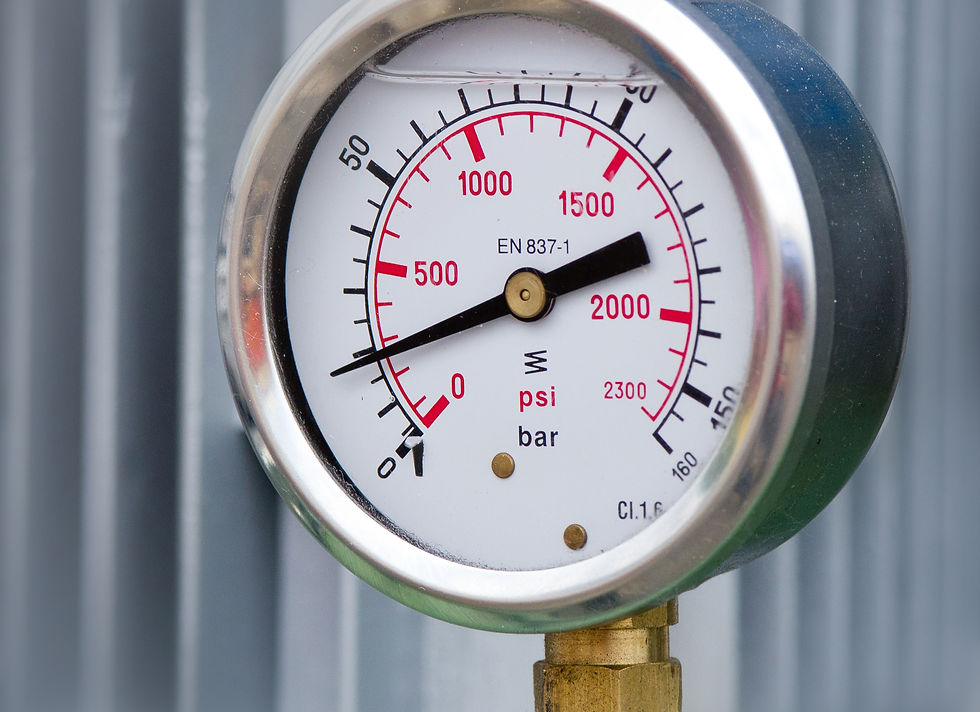
The sweet spot most plumbers aim for is 50–70 psi. Anything consistently over 80 psi starts putting extra stress on the entire system.
How High Pressure + Hard Water Affects Your Pipes
When you combine higher-than-average pressure with our hard water, it can be tough on copper pipes — especially in homes built in the 1970s through 1990s. The constant pressure can speed up wear on joints and fittings, while the minerals in the water slowly cause scale buildup inside the pipes. Over time, this combination increases the chance of pinhole leaks, corrosion, and premature pipe failure.
That’s why we see a lot of slab leaks and hidden pipe issues in certain parts of San Clemente and South Orange County.
What Happens When Pressure Is Too High or Too Low
Too high: Extra strain on pipes, fittings, water heaters, and appliances. You’ll often hear water hammer (banging sounds), see dripping faucets, or notice higher water bills.
Too low: Weak showers, slow-filling appliances, and tankless water heaters that can’t keep up when multiple fixtures are running.
How We Can Help
At Clear Water Plumbing, we do simple, no-obligation water pressure checks all the time. We hook up a professional gauge, tell you exactly what your pressure is reading, and give you honest recommendations.
If it’s running too high, we can install or adjust a pressure-reducing valve (PRV) to bring it back into the safe range.
If it’s too low, we can recommend the right booster pump solution for your home.
A quick check like this often prevents expensive repairs down the road and makes daily life more comfortable.
Would you like us to check your water pressure?
We offer free on-site estimates throughout San Clemente, Dana Point, San Juan Capistrano, Laguna Niguel, Mission Viejo, and all of South Orange County.
Call us at (949) 308-3010 or book your free pressure check online today.
Have questions about your specific neighborhood or want to know what’s normal for your street? Drop them in the comments — we’re happy to help.


Comments